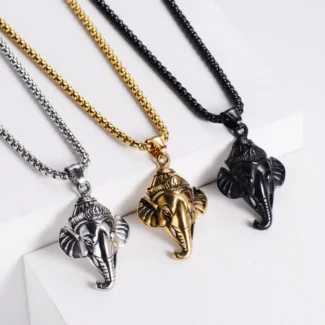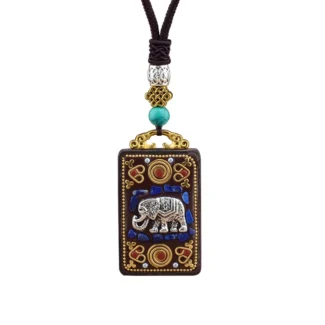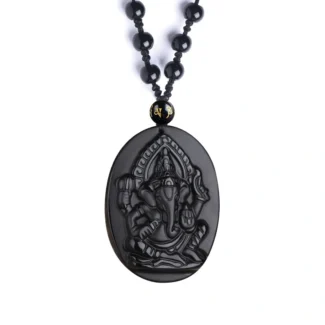


The visual power of the Endless Knot is immediate and profound. Its perfect, flowing geometry appears at once simple yet impossibly complex, a single unbroken line weaving through itself without beginning or end. This ancient design transcends culture and time, speaking directly to a fundamental human search for meaning, connection, and a sense of the eternal.
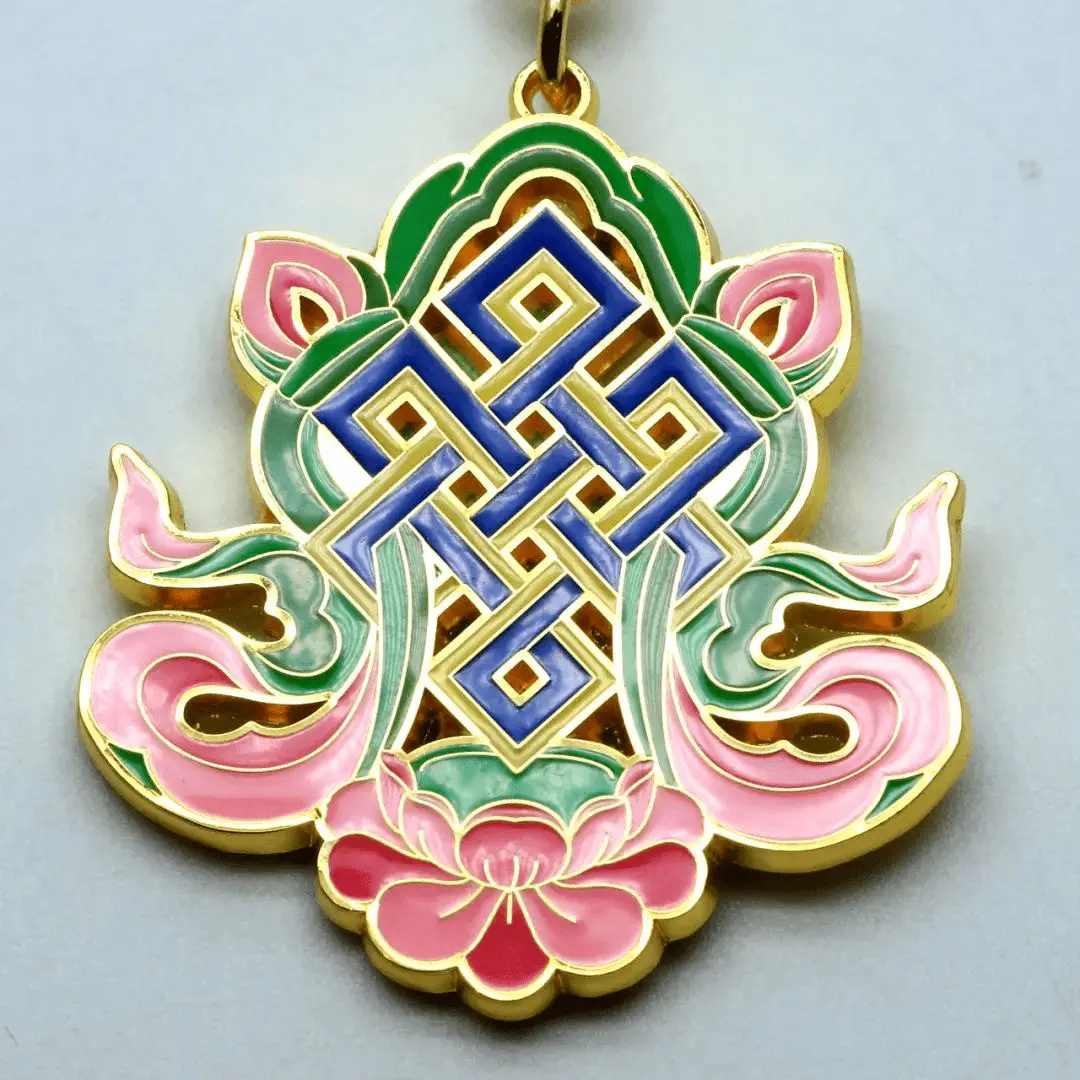
At its core, the Endless Knot, known in Sanskrit as the Shrivatsa, is one of the Eight Auspicious Symbols (Ashtamangala) of Tibetan Buddhism. It represents the ultimate unity of wisdom and compassion. Its interwoven, closed-path design signifies the infinite, cyclical nature of existence (Samsara), the immutable law of cause and effect (Karma), and the unbroken continuum of the Buddha’s enlightened teachings (the Dharma).
The Endless Knot is a sacred symbol with deep roots in Tibetan Buddhism, Hinduism, and Chinese culture. It visually represents the universe’s fundamental interconnectedness, the cyclical nature of life and rebirth (Samsara), and the inseparable union of wisdom and compassion on the path to enlightenment. As a talisman, it is believed to attract harmony, longevity, and auspicious fortune.
Table of Contents
The Ancient Origins & Sacred Legends: Tracing the Unbroken Lineage
The journey of the Endless Knot begins in the sacred lore of ancient India and Tibet, where it emerged not as a mere pattern but as a profound diagram of cosmic truth. Its presence is a testament to an unbroken lineage of spiritual wisdom, passed down through millennia. We find its essence etched into the very foundations of Dharmic philosophy.
The Mark of the Buddha’s Mind
According to tradition, the Endless Knot is one of the Ashtamangala, the eight auspicious symbols believed to have been celestial offerings made by the gods to the Buddha Shakyamuni immediately following his enlightenment. It was presented as a symbol of his awakened mind—omniscient, boundless, and fully realized. The knot represents the eternal continuum of his mind, which pervades all of time and space.
This origin story is critical. The symbol’s lack of a beginning or an end is a direct representation of the Buddha’s teachings, the Dharma. These truths are timeless, unchanging, and flow eternally for the benefit of all sentient beings, an endless stream of wisdom that can never be exhausted.
Historical imprints of the knot and similar motifs can be traced back to the Indus Valley Civilization around 2500 BCE. However, its codification as a core Buddhist emblem solidified its role, appearing on Tibetan thangkas, monastery architecture, and ritual objects, forever marking it as a signpost on the path to liberation.
A Cross-Cultural Tapestry: Roots in Tibetan Buddhism, Hinduism, and Feng Shui
While most deeply associated with Tibetan Buddhism, the Endless Knot’s influence weaves through several major Eastern traditions, each adding a unique layer to its symbolic resonance. We recognize its power is not confined to a single path but speaks a universal language of harmony and connection.
In Tibetan Buddhism, the symbol’s primary meaning is the inseparable union of prajna (wisdom) and karuna (compassion). These two qualities are the wings of enlightenment; one cannot fly without the other. The knot is a constant visual reminder of the intricate interdependence of all phenomena, a core tenet of Buddhist thought.
Within Hinduism, the Endless Knot is often associated with the god Vishnu and is known as the Shrivatsa, a mark on his chest. It represents his consort, the goddess Lakshmi, symbolizing eternal love, prosperity, and the cosmic stability over which Vishnu presides. Here, it is a mark of divinity and auspicious fortune.
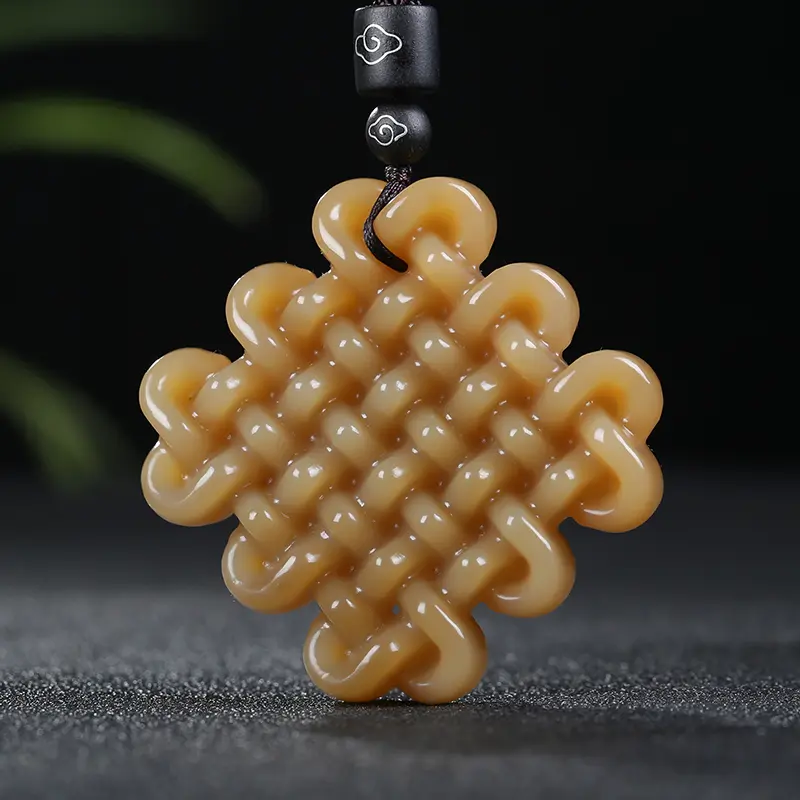
In Chinese Feng Shui, the symbol is called the Mystic Knot. It is regarded as a potent enhancer of good fortune, representing a long, happy, and prosperous life. The knot is used to activate positive energy (chi), ensuring the uninterrupted flow of blessings, health, and success within a space or for an individual.
The Hidden Philosophy: Decoding the Symbolism of Interconnectedness
Beyond its historical and cultural contexts, the Endless Knot serves as a sophisticated philosophical map. Its elegant lines chart the fundamental laws of existence as understood in Eastern thought. To contemplate the knot is to contemplate the very nature of reality.
The Doctrine of Interdependence (Pratītyasamutpāda)
The knot is perhaps the most perfect visual metaphor for the Buddhist principle of Dependent Origination, the concept that nothing exists in isolation. Every loop, turn, and intersection is wholly dependent on all the others for its form and existence. Remove one part, and the entire structure collapses.
This visualizes a core tenet: the world is an intricate web of causes and conditions, with no single, independent part. It teaches us that the concept of a separate “self,” an isolated ego, is an illusion. Our existence is intrinsically and inseparably linked to the existence of everyone and everything else.
Contemplating this aspect of the knot helps dissolve feelings of alienation. It fosters a sense of belonging to a vast, interconnected whole, replacing loneliness with a profound sense of unity.
The Unbroken Cycle: Samsara and Karma
The continuous, looping lines of the symbol provide a powerful diagram of Samsara. This is the endless cycle of birth, death, and rebirth that characterizes worldly existence, a cycle driven by ignorance, attachment, and aversion. The knot has no discernible start or finish, perfectly mirroring this cyclical, often bewildering, journey.
Furthermore, the knot is a clear representation of the law of Karma. The path of its line always returns to itself, illustrating how every action, thought, and word (a cause) creates a ripple that inevitably flows back as an effect. Our present is woven from the threads of our past, and our future is being woven by the threads of our present.
It is a symbol not of fatalism, but of agency. By understanding this unbroken chain of causality, we are empowered to create positive causes that will lead to beneficial effects for ourselves and others.
The two primary interwoven strands within the knot are philosophically understood as the two essential qualities of an enlightened being: Wisdom (the profound understanding of emptiness and interdependence) and Compassion (the active, skillful means of alleviating suffering). The symbol’s structure makes it clear that these are not separate virtues. True enlightenment is impossible with one and not the other, as wisdom without compassion is sterile, and compassion without wisdom is blind. They must arise together, forever intertwined in a perfect, dynamic harmony.
Cultural Evolution: How The Endless Knot is Viewed in East vs. West
As with many sacred symbols, the Endless Knot’s meaning has evolved and adapted as it has traveled across cultural boundaries. Its interpretation in its native Eastern context differs subtly but significantly from how it is often perceived in the West. Understanding this evolution enriches our appreciation for its depth.
Eastern Perspective: An Emblem of Dharma and Cosmic Order
In Tibetan, Chinese, and Indian cultures, the knot is primarily seen as a spiritual and philosophical diagram. It is a teaching tool, a constant reminder of the fundamental laws of the universe and the path to spiritual awakening. Its presence is not merely decorative but functional.
Its placement on sacred texts, monastery doorways, and ceremonial objects underscores its role as a protective and sanctifying symbol. It is meant to invoke the blessings of the enlightened ones and to guard the sanctity of the teachings. For a practitioner, the knot is a guide for the journey inward.
Western Interpretation: From Celtic Parallels to a Symbol of Eternity
A common point of inquiry in the West arises from the knot’s visual similarity to Celtic knots. While both feature intricate, interwoven lines, their philosophical scope differs. As discussed by scholars at Britannica, Celtic Knots often represent more specific concepts like the Holy Trinity, the four seasons, or a particular lineage within a specific cultural framework.
The Buddhist Endless Knot, in contrast, represents a universal, cosmic law—the very fabric of reality itself—which transcends any single lineage, culture, or faith. It is a symbol of a fundamental truth accessible to all. As such, we believe its wisdom is a gift to the world.
In modern Western culture, the symbol is frequently adopted in a more secular context. It has become a popular emblem of eternal love between partners, an unbreakable bond of friendship, or a personal journey toward self-discovery. This focuses its meaning on interpersonal connection rather than its broader cosmic and philosophical implications.
Wearing the Talisman: Why The Endless Knot Jewelry Matters Today
In our contemporary world, filled with digital distractions and a pervasive sense of fragmentation, ancient symbols like the Endless Knot take on a new and urgent relevance. Wearing it is not a passive act; it is a conscious choice to carry a piece of profound wisdom with you. We have seen firsthand how it can serve as a powerful anchor in modern life.
An Antidote to Digital Burnout and Modern Isolation
The modern condition often fosters a sense of separation—from each other, from nature, and even from ourselves. In this age of digital fragmentation, wearing the Endless Knot serves as a potent physical reminder of our inherent and inescapable interconnectedness with all life.
It acts as a conceptual remedy, a shield against the illusion of alienation. It grounds the wearer in the comforting and empowering truth that we are not isolated islands but integral parts of a vast, interwoven cosmic network. This perspective can profoundly shift one’s experience of daily challenges.
The Mindful Anchor: A Tactile Reminder of the Path
The simple act of touching an Endless Knot pendant or tracing the lines on a bracelet can become a micro-meditation. It is a physical touchstone that invites a pause, a breath, a return to the present moment, and a recollection of the principles of the Dharma.
It prompts the wearer to consciously practice compassion in their interactions and to seek wisdom in their understanding of the world. This transforms a piece of jewelry into an active tool for spiritual development, helping to bridge the gap between abstract philosophy and lived experience. When you are ready to find your own anchor, you can see THE ENDLESS KNOT (Collection) picks for this year and choose a piece that resonates with your journey. To broaden your understanding of protective symbols, you can also explore this year related guides.
- 🧿 Mindful Visualization: Each morning, take 60 seconds to visualize the Endless Knot. Trace its lines in your mind and feel your connection to the web of life around you.
- 🌸 Set a Daily Intention: Touch your Endless Knot jewelry and set an intention for the day, such as “Today, I will act with both wisdom and compassion,” or “I will see the interconnectedness in every interaction.”
- ☸️ A Pause for Reflection: During moments of stress or conflict, gently hold your Endless Knot. Use it as a physical anchor to pause, breathe, and remember that this moment is connected to all others, and it too shall pass.
- 🕉️ Gift with Meaning: Share the symbol’s power. When you gift an Endless Knot, explain its meaning of an unbreakable, auspicious bond, thereby strengthening your connection to the other person.
Ritual & Practice: How to Meditate with The Endless Knot
Meditation with the Endless Knot is a powerful way to internalize its meaning and move from intellectual understanding to experiential realization. This practice uses the symbol as a focal point to cultivate a deep sense of harmony and unity. It requires no prior experience, only a willingness to be present.
Preparation
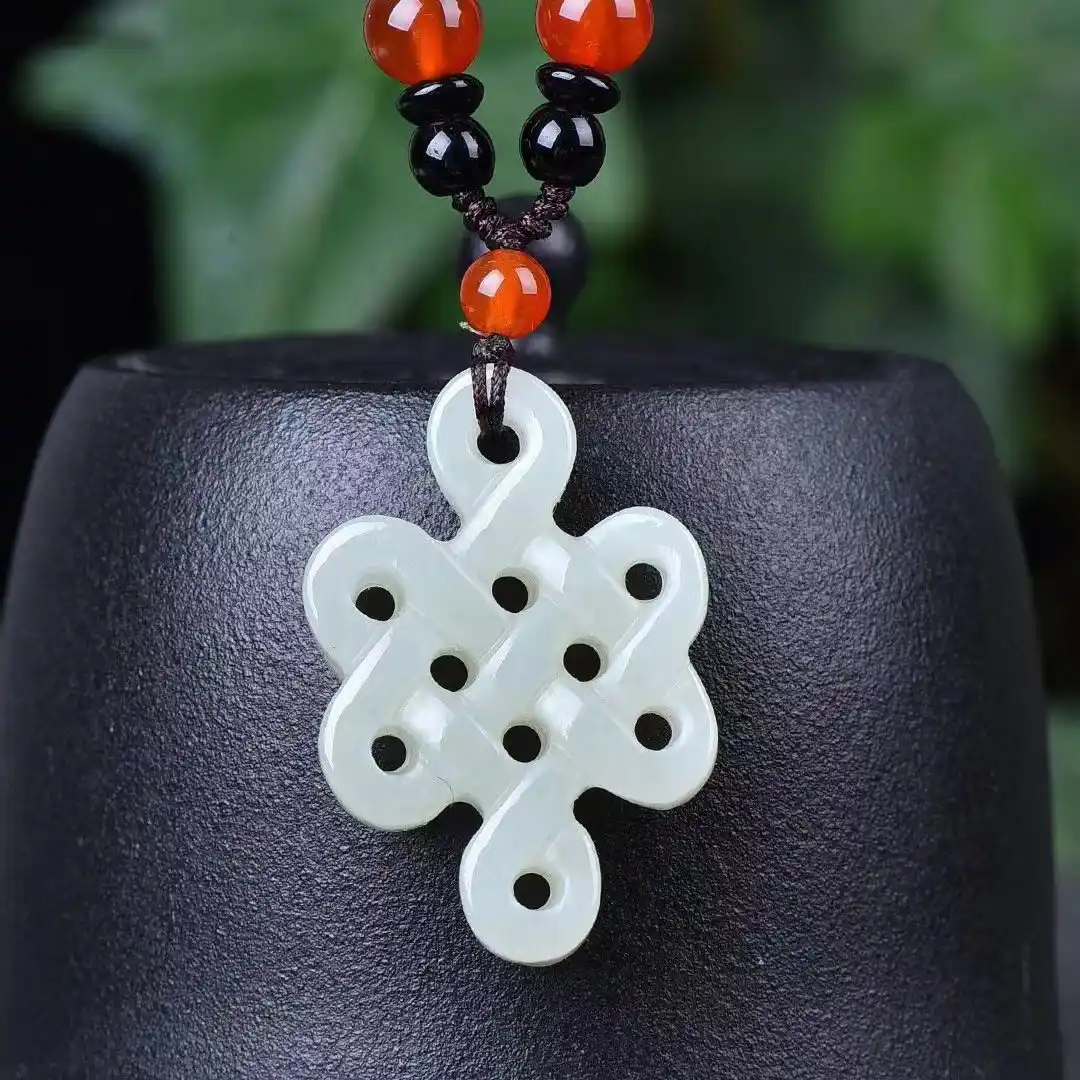
Find a quiet, comfortable space where you will not be disturbed. Sit with a straight but relaxed spine, either on a cushion or a chair. If you have an Endless Knot charm or piece of jewelry, hold it gently in your hands; otherwise, place a clear image of it before you.
Breath and Centering
Close your eyes and take three deep, cleansing breaths. Inhale through your nose, filling your belly, and exhale slowly through your mouth. Allow your awareness to settle into the present moment, releasing any thoughts about the past or future.
Mental Tracing
Bring the image of the Endless Knot into your mind’s eye. Select an arbitrary point on one of its lines. With your mind’s focus, slowly begin to trace the unbroken path, following its continuous, flowing, and overlapping course.
Do not try to solve the knot or find its “secret.” The goal is not to analyze but to experience its flow. Simply follow, noticing how the line turns, crosses over itself, and dives underneath, all while remaining a single, complete entity.
Thematic Contemplation
As you continue to trace the path, gently introduce the knot’s meaning into your awareness. Feel the reality of interconnectedness—with your loved ones, your community, the natural world, and the entire universe. See how your own life path weaves in and out of the lives of others.
Reflect on a recent action (a cause) and trace its potential effects as they ripple outward. Acknowledge the inseparable link between your capacity for wisdom—to see things clearly—and your capacity for compassion—to act with kindness. Feel these two qualities merging within you, just as they do in the knot.
Integration
After several minutes, or whenever you feel ready, release the visualization. Sit for another moment in silence, bathing in the feeling of wholeness, unity, and peace that the symbol represents. Make the intention to carry this feeling of unbroken connection with you as you move back into your day.
Cultural Etiquette & Taboos: Respecting a Sacred Symbol
As the Endless Knot is a sacred emblem, we believe it is essential to engage with it mindfully and respectfully. Its power is amplified when we honor its origins and the profound truths it represents. This respect extends to how we place, wear, and share the symbol.
While its origins lie in Dharmic traditions, the Endless Knot’s message of universal interconnectedness and harmony is not exclusive. We believe it can be respectfully used and worn by anyone who resonates with its profound philosophy. The key is sincere intention—approaching the symbol with an appreciation for its depth rather than as a mere fashion accessory.
Reverence and Placement
As one of the Eight Auspicious Symbols, which are central to Buddhist iconography as documented by resources like the Himalayan Art Resources project, the Endless Knot should be treated with reverence. It should never be placed directly on the floor, on shoes, or in a bathroom where it can become soiled or treated with disrespect. When not being worn, it is best kept in a clean, elevated place, such as on an altar, a shelf, or in a jewelry box.
Tattoo Etiquette
For those who choose to carry the symbol’s meaning permanently as a tattoo, placement is an important consideration. To honor its elevated spiritual status, it is traditionally considered most respectful to place it on the upper body, above the waist. This signifies that you hold its meaning in high regard, close to your heart and mind.
Frequently Asked Questions (FAQ)
What is the deepest spiritual meaning of the Endless Knot?
Its deepest meaning lies in the representation of ultimate reality (Shunyata, or emptiness), where all phenomena are understood to be devoid of independent, inherent existence. Everything is intrinsically interconnected and co-arises with everything else. The knot is a visual key to understanding the non-dual nature of the cosmos and the fully realized, omniscient mind of a Buddha.
How does the Endless Knot symbolize the unity of wisdom and compassion?
The symbol is visualized as two primary strands that are completely intertwined and inseparable. One strand represents wisdom (prajna), the clear-seeing insight into the nature of reality. The other strand represents compassion (karuna), the active, skillful method of helping all beings suffering within that reality. The knot shows that they are not two separate things to be cultivated independently, but a single, unified quality of enlightenment that must arise together.
What is the difference between the Buddhist Endless Knot and the Celtic Knot?
The primary difference is their philosophical scope and intent. The Buddhist Endless Knot represents a universal, abstract concept: the infinite interconnectedness of all phenomena and the nature of cosmic law (Dharma). In contrast, Celtic Knots, while also beautiful symbols of eternity, are often more specific, representing concepts like heritage, lineage, the Christian Trinity, or the four seasons within a particular European cultural framework.
How does the Endless Knot visually represent the law of Karma and Samsara?
Its continuous, closed loop perfectly illustrates the cyclical nature of Samsara, the endless cycle of birth and rebirth that has no clear beginning or end for unenlightened beings. The way the lines weave and invariably return upon themselves also visualizes the mechanics of Karma. It demonstrates how every action (a point on the line) is part of an unbroken chain of causality that eventually leads back to the originator as a consequence, creating the fabric of one’s experience.
What is the significance of gifting someone an Endless Knot?
Gifting an Endless Knot is a profound and highly auspicious act. It conveys a powerful wish for the recipient’s long life, good health, and uninterrupted good fortune. Spiritually, it signifies the establishment or recognition of a powerful, lasting karmic bond of love, friendship, or connection between the giver and the receiver, a bond that is harmonious and beneficial.
Conclusion: Integrating the Wisdom of The Endless Knot
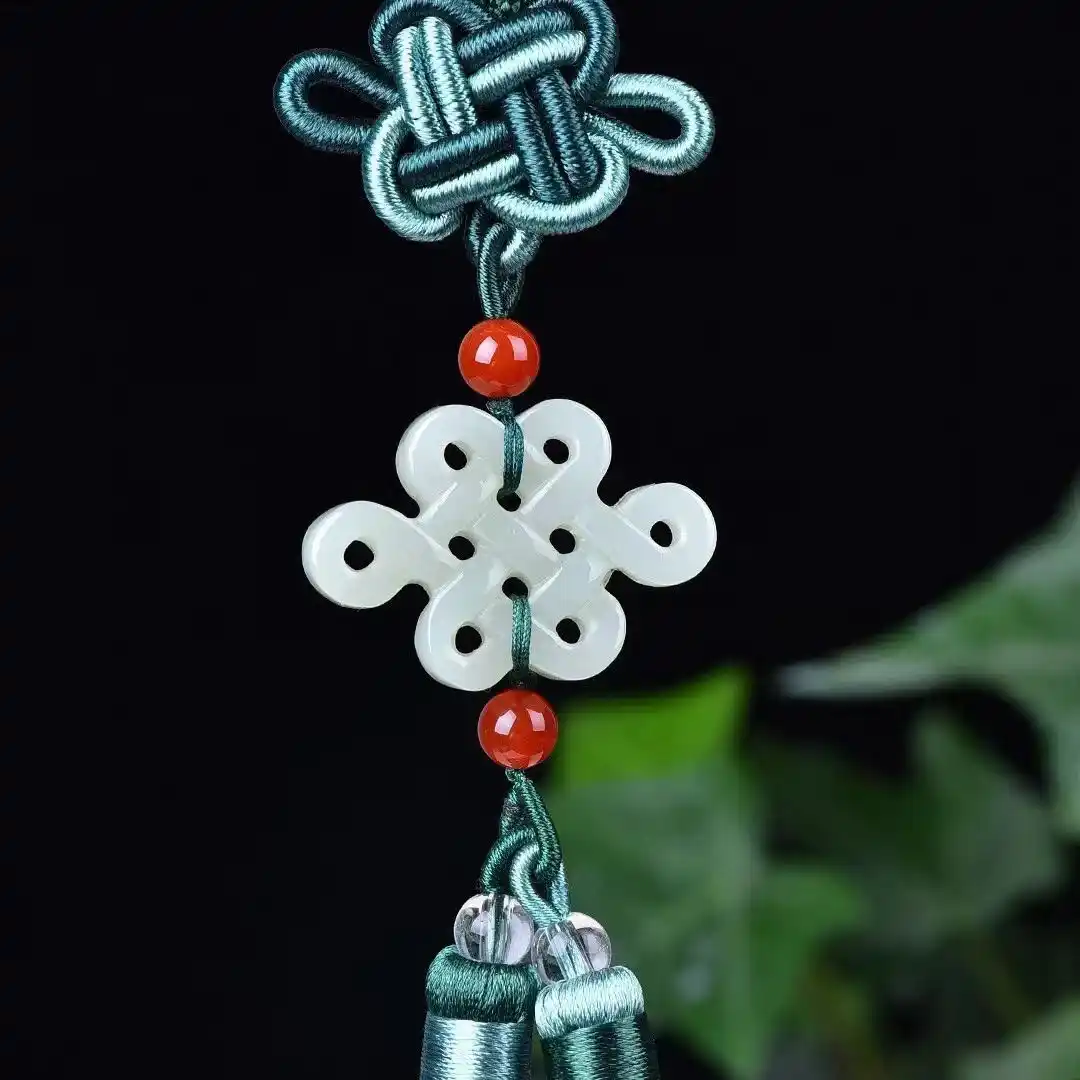
The Endless Knot is far more than a beautiful design or an exotic artifact; it is a spiritual blueprint for a more connected, harmonious, and compassionate life. Its true power is unlocked when we move beyond intellectual appreciation and begin to embody its wisdom in our daily lives. This means actively looking for the interconnectedness in our relationships, our communities, and our world, and choosing to act from a place of unified wisdom and compassion.
From Symbol to Lived Experience
The journey with this symbol is one of integration. It challenges us to see the world not as a collection of separate objects and beings, but as a single, dynamic, and interwoven whole. The knot reminds us that every thought we think and every action we take sends ripples through this infinite web.
As we continue to explore these topics in our our Symbolism & Culture guides, we are constantly reminded that these are not just historical curiosities. They are living teachings. The lessons of the Endless Knot, as described in texts available through resources like the Tricycle Foundation, are as relevant today as they were centuries ago, perhaps even more so.
A Blessing of Unbroken Connection
May the intricate, perfect path of the Endless Knot serve as a constant reminder of the infinite, unbreakable bonds that unite us all. May it guide you toward harmony in your life, inspire your innate compassion for others, and awaken you to the profound and beautiful truth of our shared existence. May your journey be auspicious and your connections be everlasting.
Cultural Researchers & Feng Shui Practitioners. We have been exploring traditional year-based wisdom and spiritual symbolism since 2020.